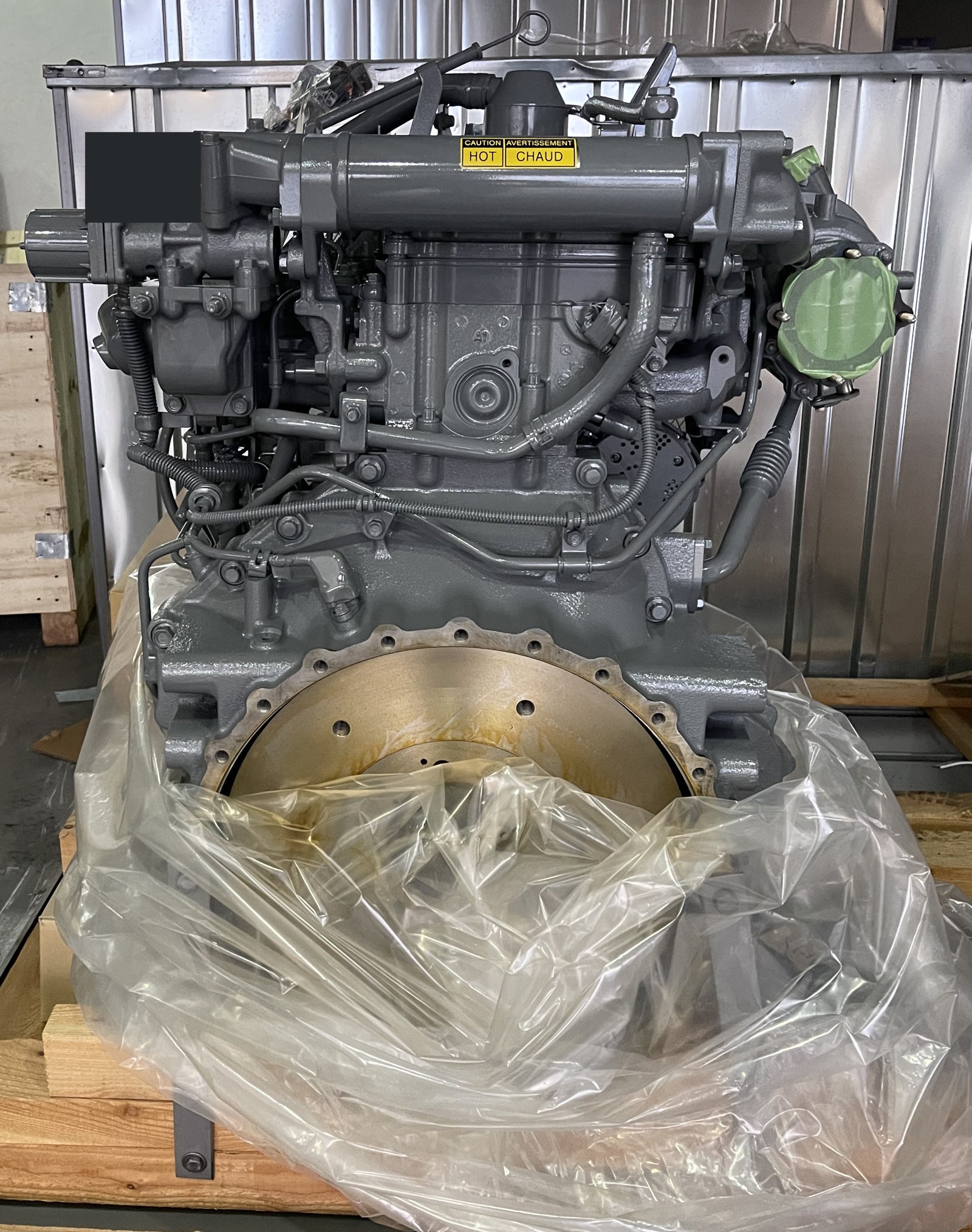
An engine assembly on a pallet, an interior view and a detached component do not tell the same story. Each record has a different field of view and a different relationship to the equipment. EexcavaStart brings these examples together to explain visible configuration and component detail, while retaining the boundaries between unrelated records.
An assembly overview describes what is visible
A complete overview helps distinguish the engine body, visible accessories and temporary supports. The far side or underside may be hidden by the assembly or its pallet. Those areas remain not shown rather than being supplied from a similar engine photograph.
The pallet-mounted engine example records an exterior configuration. A visible accessory is not automatically part of an agreed supply, and wrapping or restraints are not part of the engine specification. Inventory, delivery readiness and running condition are separate facts.
Interior and detached views need their original relationships
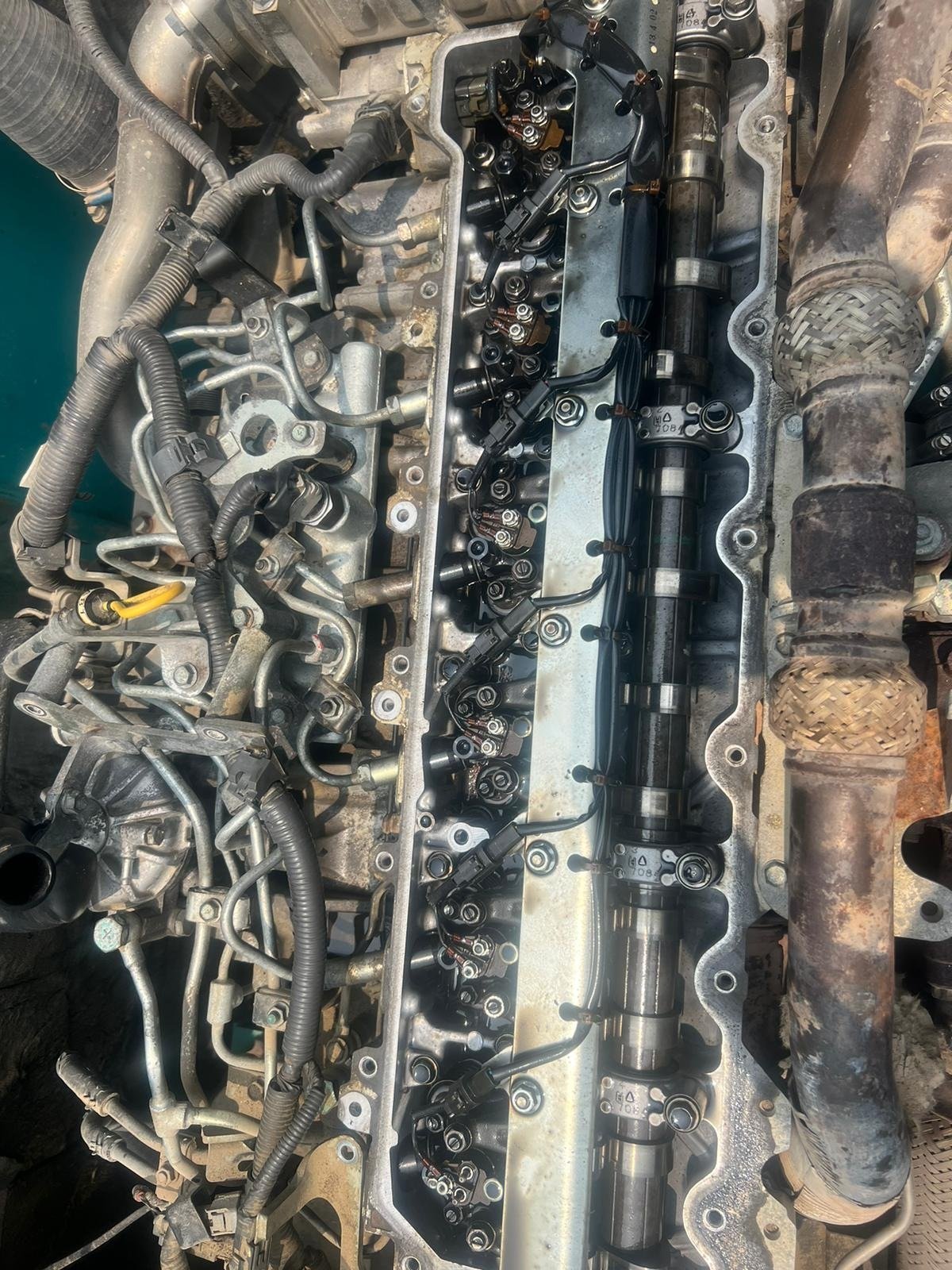
An interior overview retains the relationship between visible shafts, wiring and nearby structures. A detached component face instead records its own outline, edges and openings. Neither should be described as a later stage of the other unless the original case relationship is documented.
Existing photographs of detached items can retain their recorded arrangement. Their position on a work surface does not establish their original cylinder position, assembly order or installation direction. Unlinked details remain separate observations.
At the open block
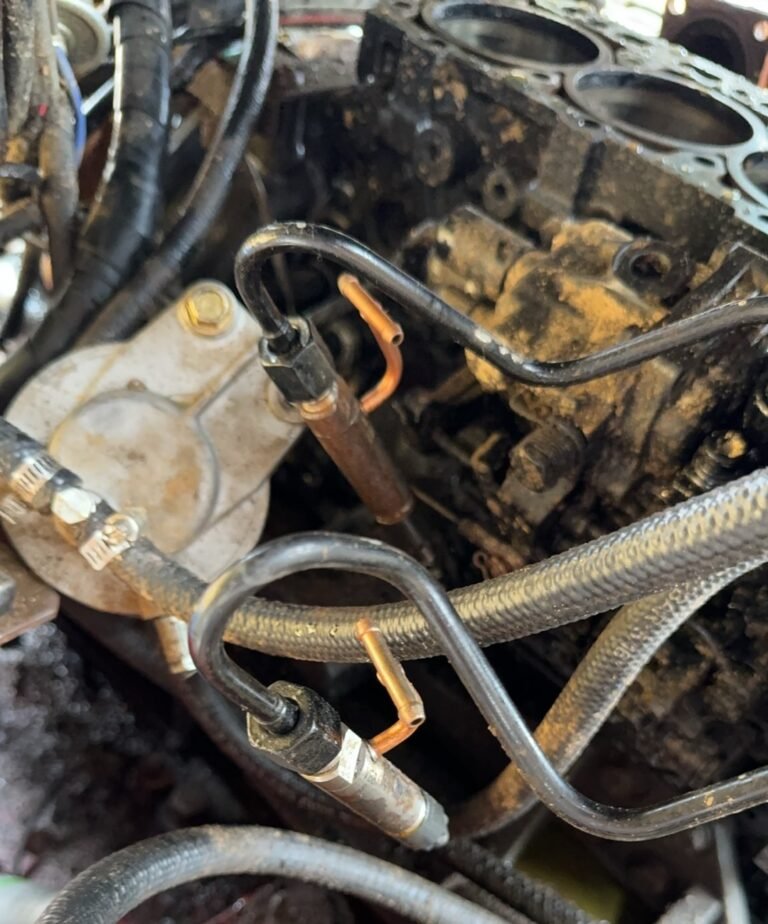
The cylinder openings sit at the upper edge of the first view. A metallic rim surrounds them, with smaller holes along the adjacent surface. Below that edge, yellow paint remains on the darker outer casting. Pipes, brackets and hoses partly conceal the side of the body.
On the removed cylinder head
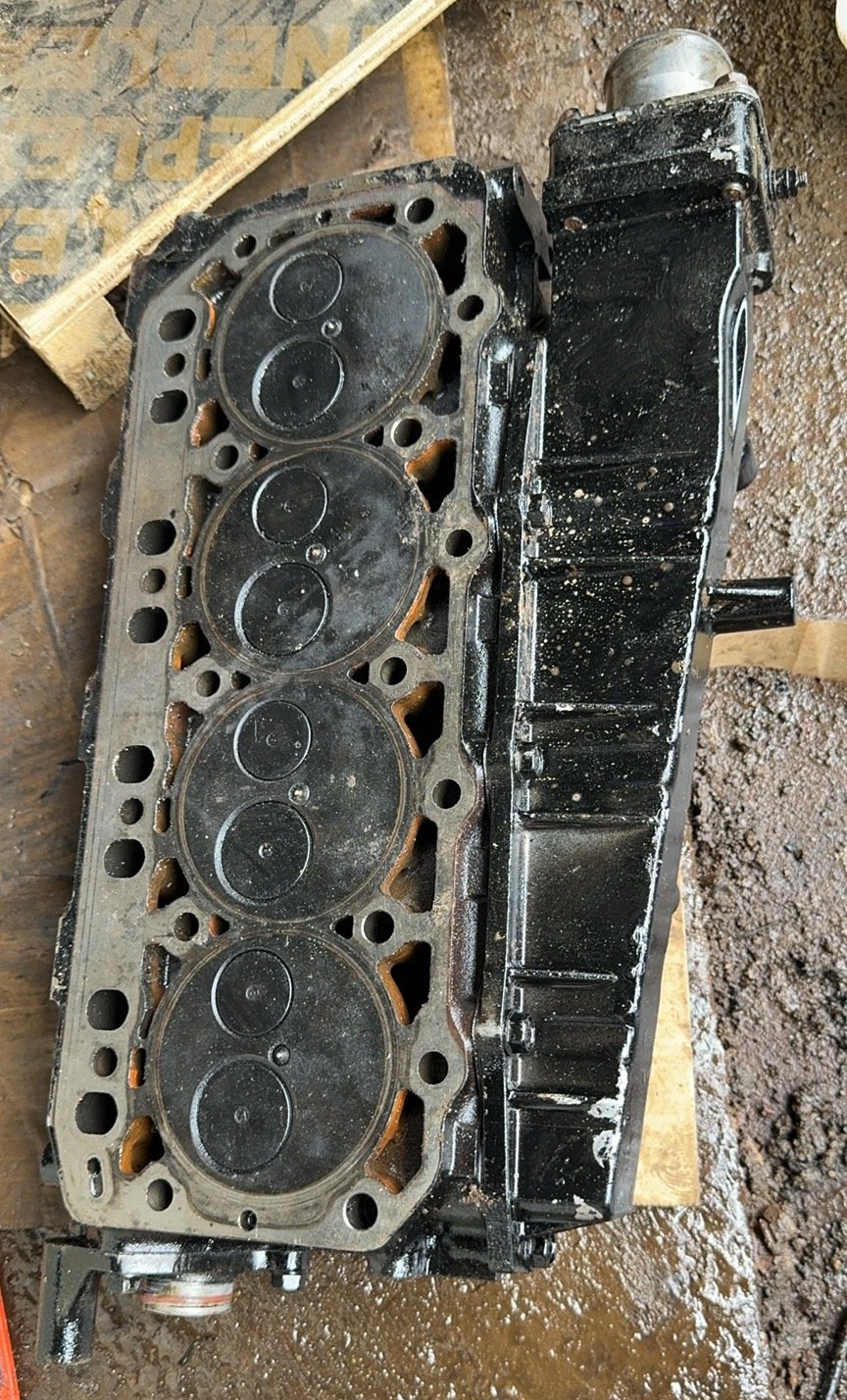
The second record brings the cylinder head’s open valve area into view. Round openings repeat along its length, beside elongated recessed sections. Raised posts stand above the surrounding surface. A slender dark tube follows a bent path across several points, while a cylindrical projection extends from one end of the casting.
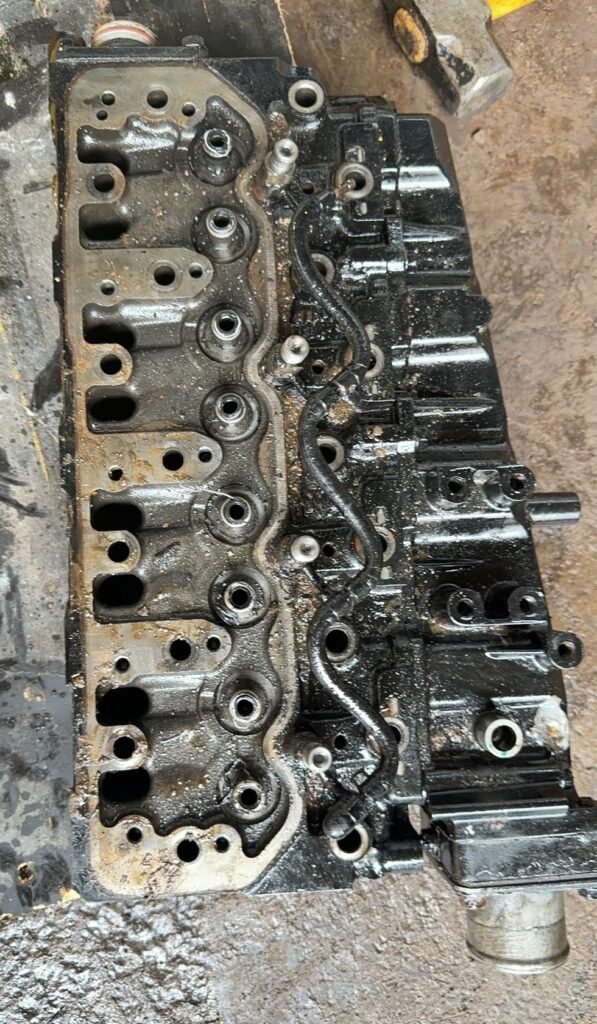
These are separate records, not a confirmed sequence from one repair. The component names identify visible forms, not an engine model or inspection result. Surface appearance alone establishes neither a fault cause nor a wear limit. No compatibility, required remedy, completed repair or test outcome is claimed.
Pipe shape and belt information belong to different comparisons
For a bent pipe, the complete route, openings, brackets and joining areas explain more than its colour. Two pipe examples placed together can support an outline comparison, but they do not demonstrate that one successfully replaced the other.
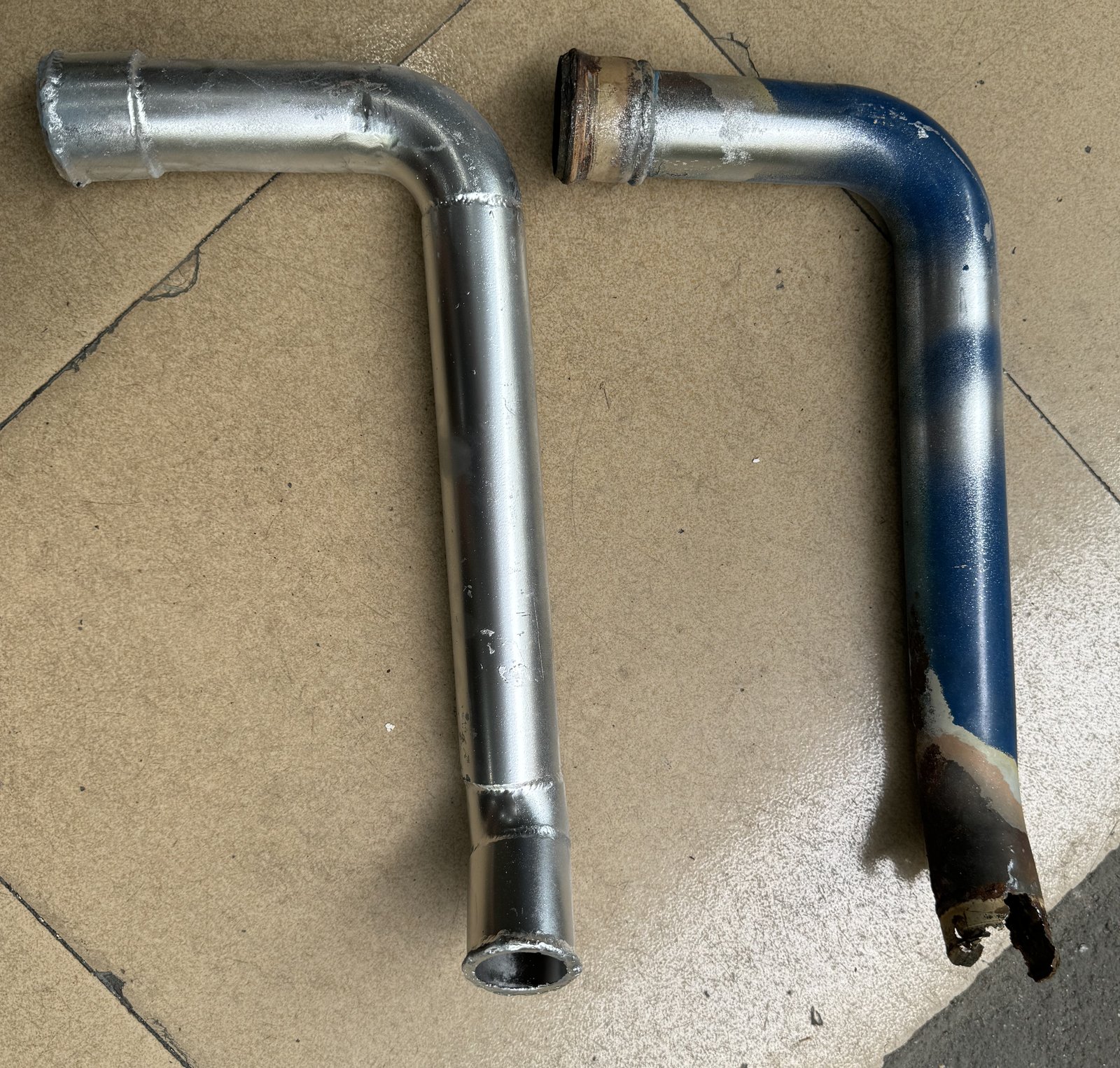
A belt or pulley record concerns visible markings, grooves, position and surrounding space. It should not be combined with a pipe photograph into an assumed complete intake, exhaust or drive system. Incomplete belt characters remain incomplete; similar digits are not a basis for reconstructing a part number.
Describe the surface without turning it into a diagnosis
Deposits, scratches, colour differences and oil traces can be described by visible location. Their appearance alone does not establish wear limits, sealing condition or the cause of a fault. The existing record should remain intact rather than being rearranged into a convincing but unsupported repair sequence.
For a parts enquiry, the helpful starting point is the identified assembly or component, its available original references and the particular configuration or interface being compared. These field records are not a running test, a teardown procedure or a record of a successful repair.
Parts enquiry FAQ
Answers from EexcavaStart for discussing identification records.
What does an engine-assembly overview help clarify?
It distinguishes the engine body, visible accessories and temporary supports. Keep the viewing reference consistent and mark areas hidden by the assembly or pallet as not shown.
How should detached components be associated with an engine record?
Retain their documented original relationship and use complete component and face views. Keep unlinked details separate rather than assigning an assumed original position.
Which features help describe a bent pipe?
Keep its complete visible route, both openings, brackets and joining areas together. Record separate pipes independently, with available original references.
Does a visible engine accessory mean it is included in supply?
No. The photographed configuration and the agreed supply scope are separate.
Can missing belt-marking characters be reconstructed?
Not from similar digits or an adjacent part. Unclear characters should remain unverified.
Do adjacent bent pipes show a successful replacement?
No. They are a shape comparison. The replacement relationship, work and outcome need separate evidence.
For a parts enquiry, share the equipment information and available original-part references through our request-a-quote page. You can also use the contact page.