A fitting close-up can be sharp yet difficult to place within a hydraulic assembly. The surrounding housing, attachment points and hose direction give that detail a location. EexcavaStart field records combine these levels of observation while keeping each photographed item independent. The aim is a clearer parts conversation, not an assumed circuit diagram.
Start with the assembly, then locate the connection
An installed overview shows the visible relationship between a housing, attached fittings and neighbouring components. A shared bolt position or housing edge can link a close detail to that overview where the original record supports the relationship.
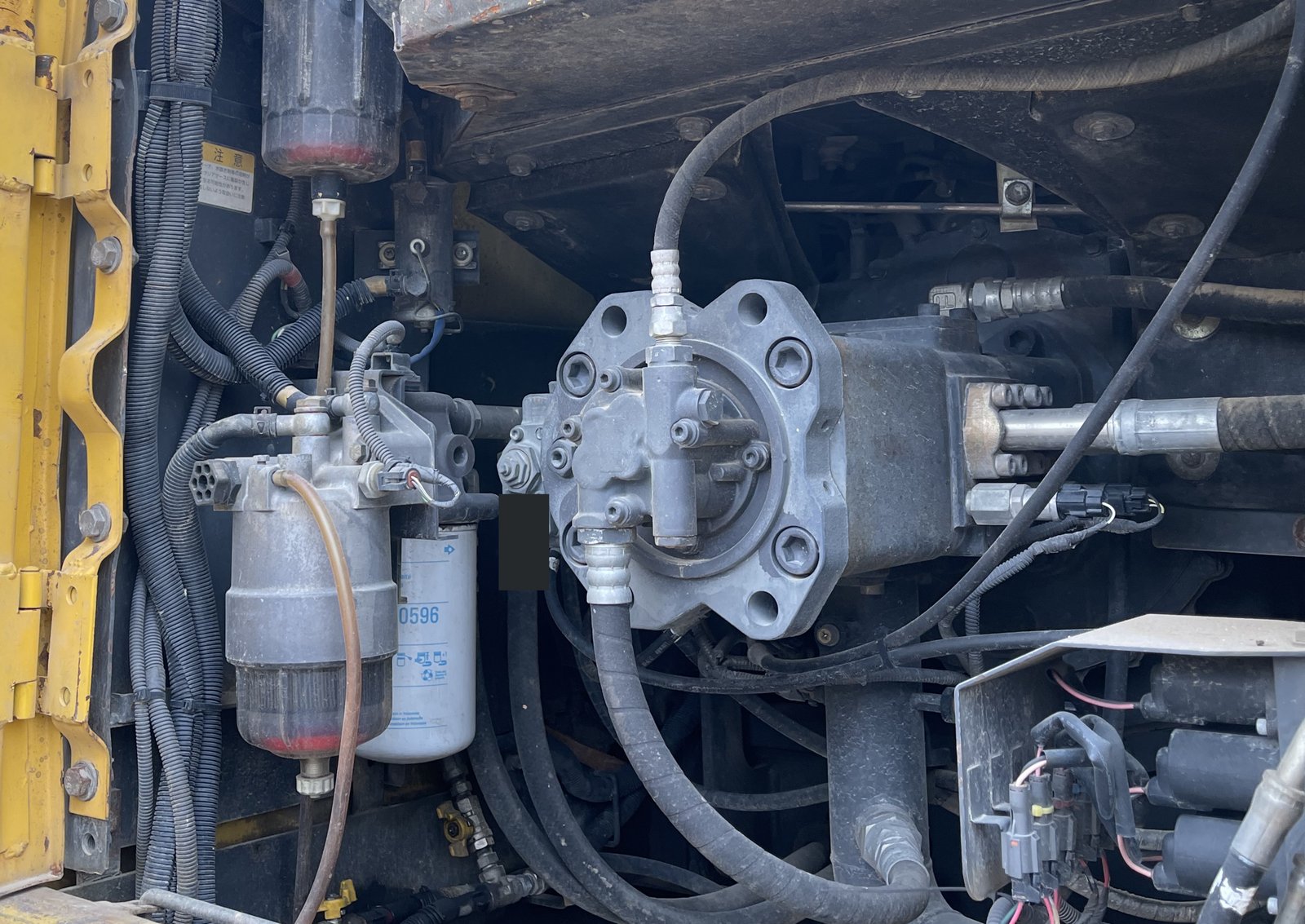
The installed hydraulic-assembly example retains visible connections and surrounding space. It does not identify unseen ports or confirm a particular pump model. An obstructed area remains unrecorded rather than being completed with a similar-looking assembly.
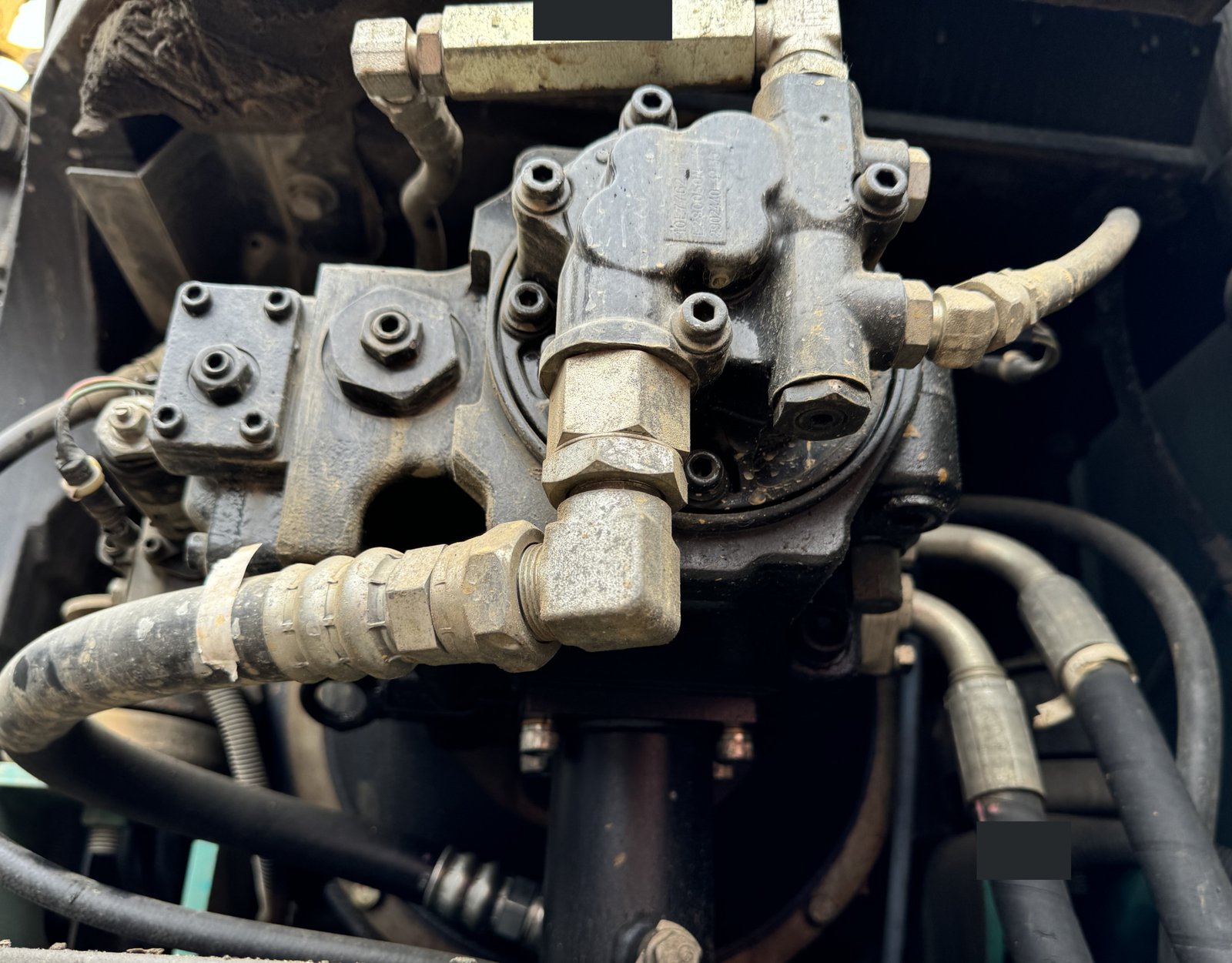
Valve blocks need their outline as well as their openings
The overall shape of a valve block gives its end covers, fixing points and attached fittings a reference. A detail of one threaded opening has a different role from a view showing the complete assembly. Both ends may matter when the middle section hides how the structure terminates.
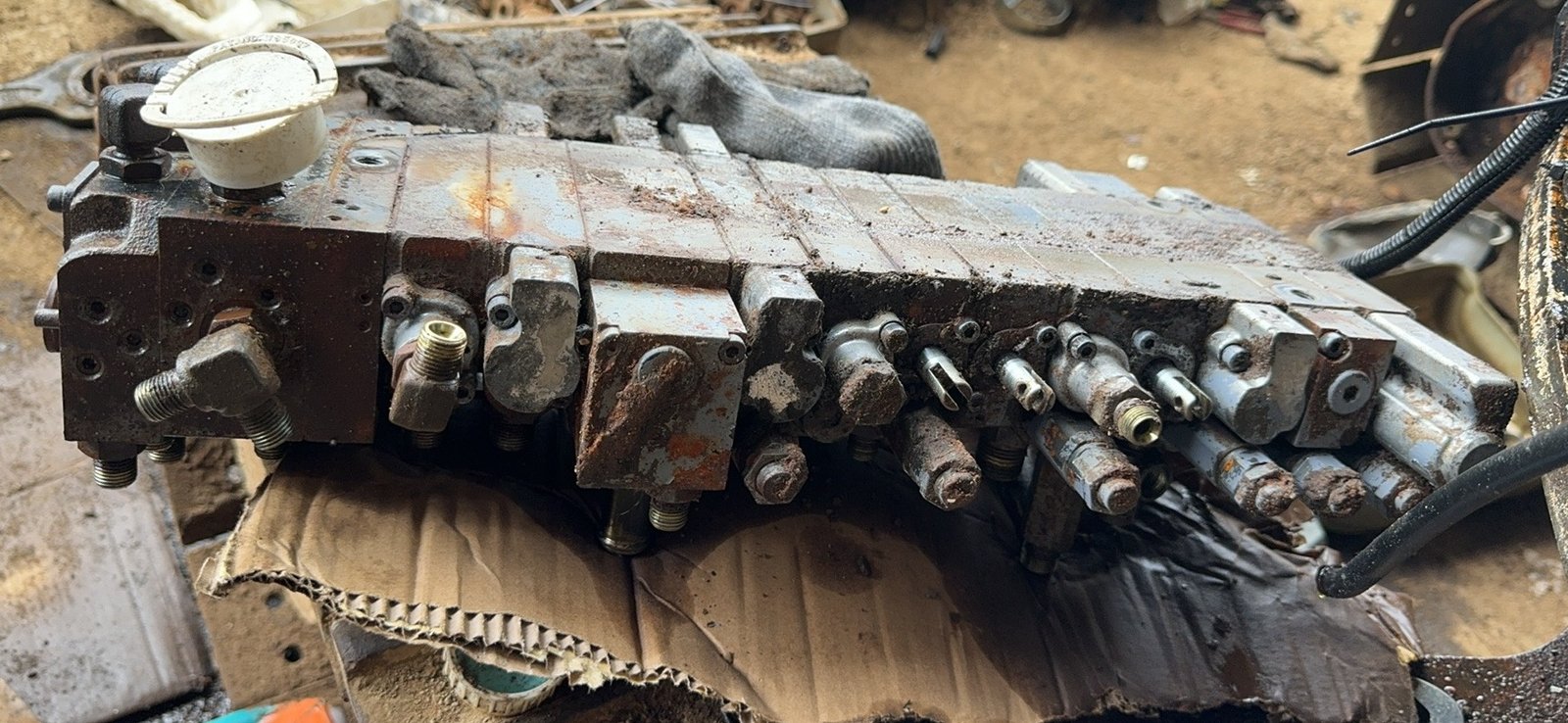
Separate valve examples in this collection show different visible arrangements. Their openings, elbows and plugged positions can be described without assigning inlet or return functions by apparent size. They must not be combined into an invented assembly or adjustment sequence.
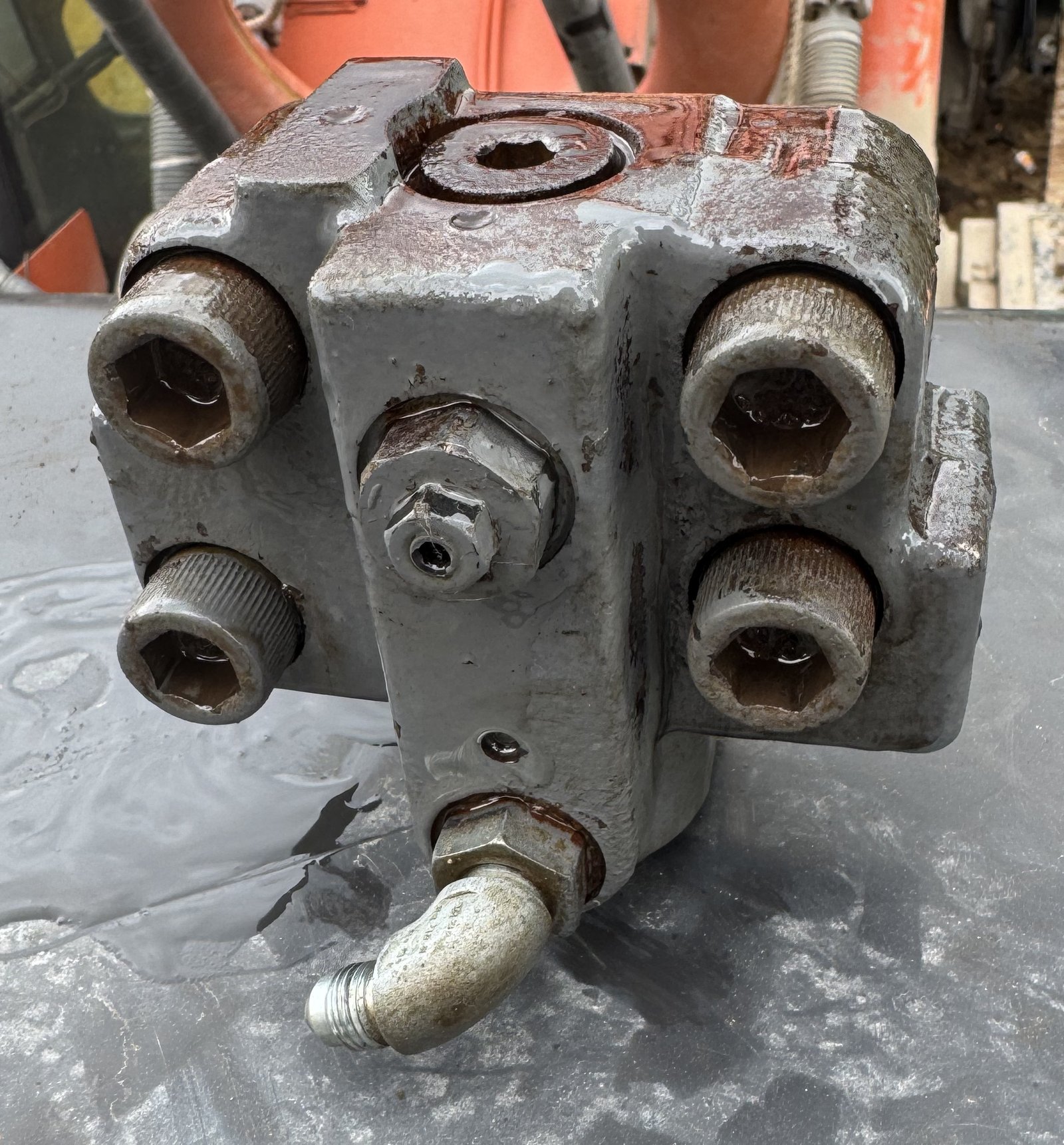
Hoses and fittings answer different comparison questions
A hose record concerns the complete visible route, bends, branches and ends. A fitting record concerns the end opening, threaded side, sealing face and bend direction. Those features belong together in the enquiry, but they should not collapse into one general statement that the pieces look the same.
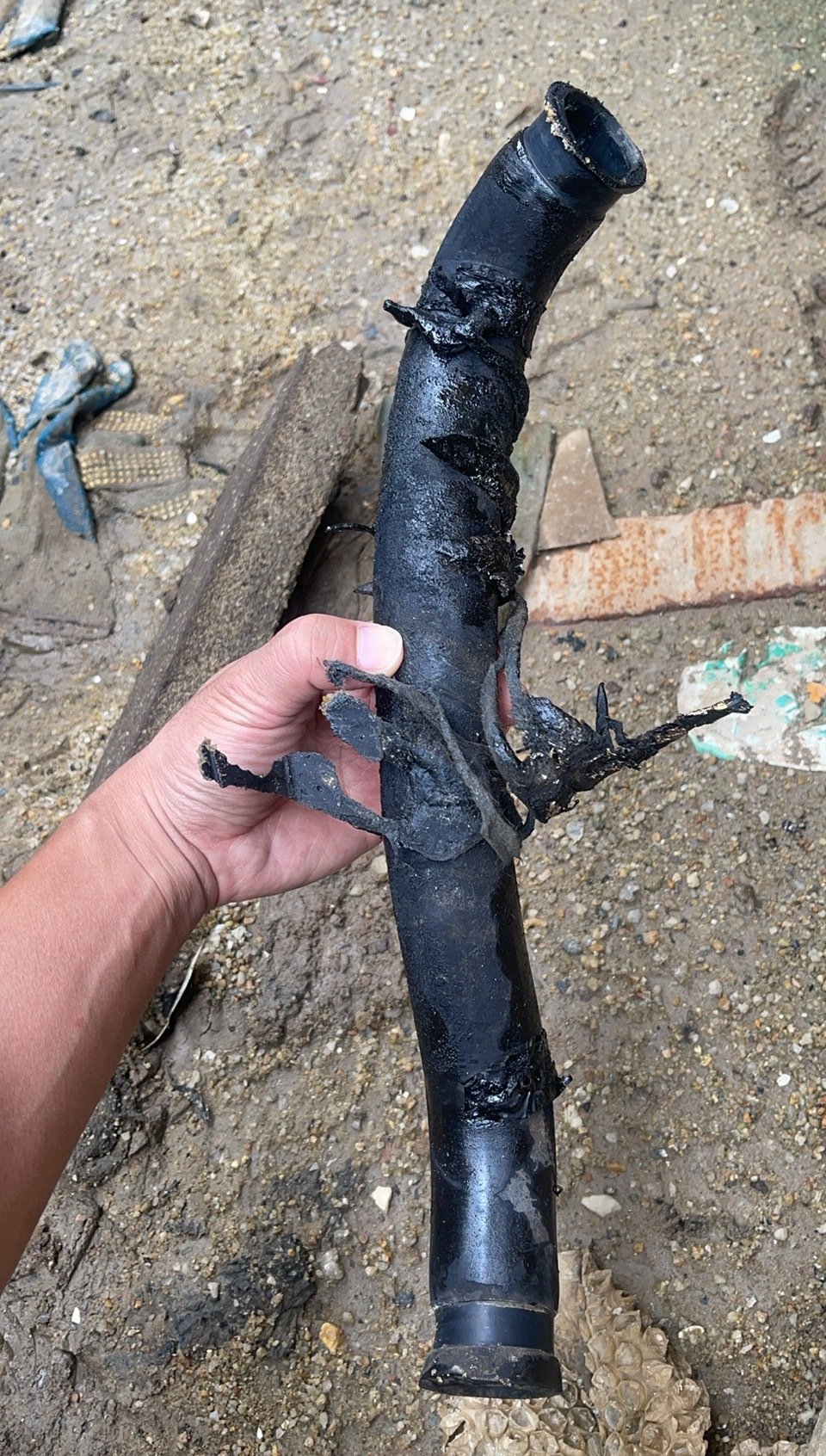
A hand-held view provides shape rather than reliable scale. For an existing length record, the stated measurement path needs to remain distinct from the straight distance between the ends. A similar diameter or a right-angle outline does not establish a thread standard or replacement match.
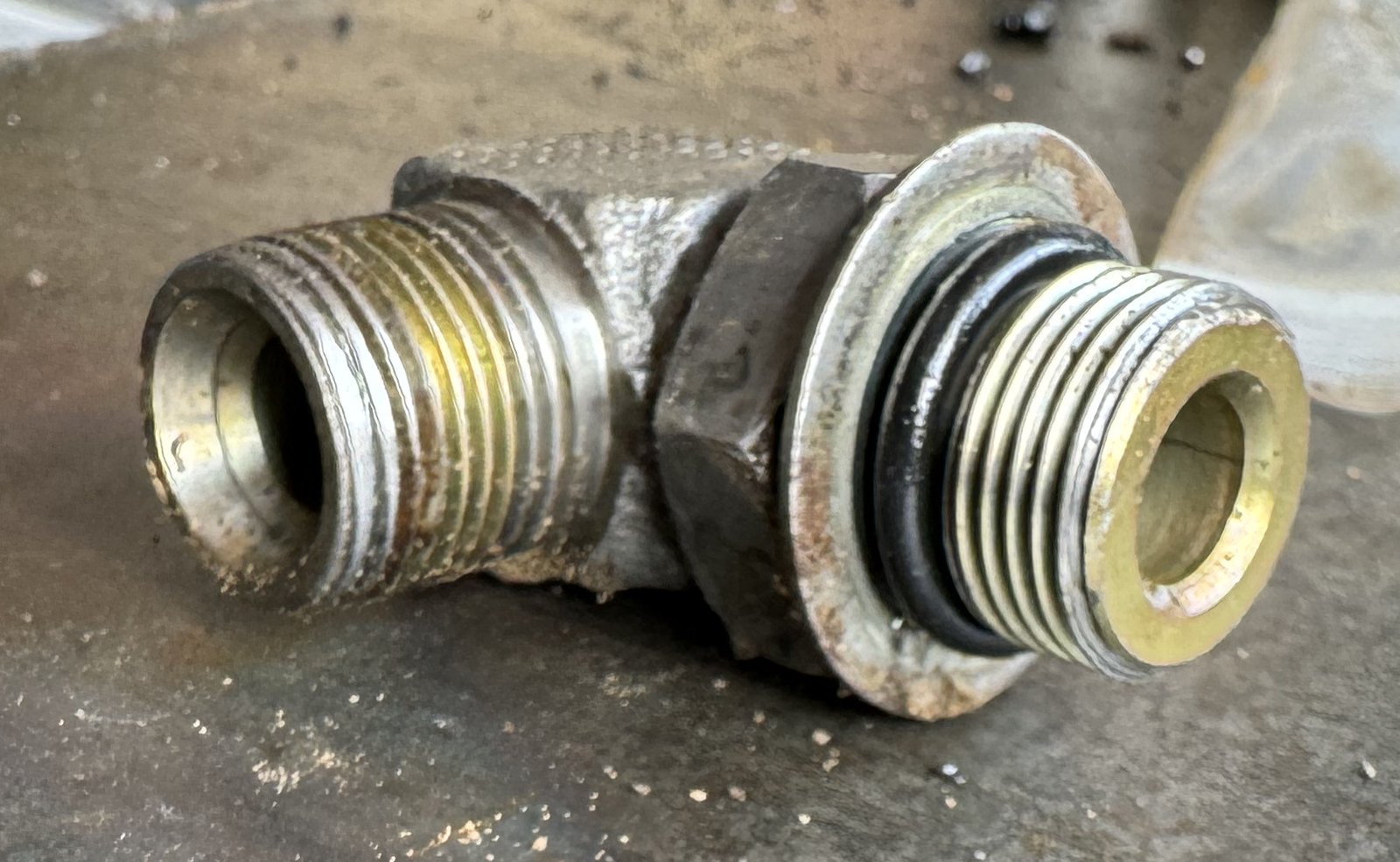
Keep condition observations separate from selection
Oil traces, surface peeling and corrosion can be recorded by visible location. They do not independently identify a leak source, working pressure, material or a failed component. Original labels, housing cast marks and hose printing also remain different kinds of reference.
A useful enquiry therefore brings together the original assembly information, complete visible configuration, mounting details and the relevant connection features. These field photographs support identification; they are not a pressure test, connection instruction or record of a successful replacement.
Parts enquiry FAQ
Answers from EexcavaStart for discussing identification records.
Which views help describe a hydraulic assembly?
Associate the visible installation context with the housing, mounting face and connection details. Retain a shared housing edge or bolt position when the original record links those views.
What should a hose and fitting enquiry keep distinct?
For the hose, retain the full shape and both ends. For the fitting, distinguish the opening, threaded side, sealing face and bend direction. Keep original references alongside the features.
How can a valve-block record stay easy to follow?
Begin with the complete outline and end arrangement, then relate visible openings, elbows and plugged positions to that record. Keep separate assemblies independent.
Does opening size establish the hydraulic circuit function?
No. Record the visible shape and position without assigning a circuit function from size alone.
Can loose valve parts on a work surface be read as assembly order?
No. Their documented relationship must be retained without inferring installation order, settings or a repair sequence.
Does an oil trace establish where a leak began?
No. It shows where the trace was visible, not a confirmed cause or source.
For a parts enquiry, share the equipment information and available original-part references through our request-a-quote page. You can also use the contact page.