An electrical compartment can contain several similar-looking relays, separate mounted boxes, a fuse holder and overlapping wiring. A photograph helps locate these visible items, but it does not show every connection between them. For a parts enquiry, its strongest contribution is often a clear record of physical position: what is mounted where, which housing is being discussed and what surrounds it. Three independent field examples illustrate this distinction at different viewing distances.
Begin with the mounting surface
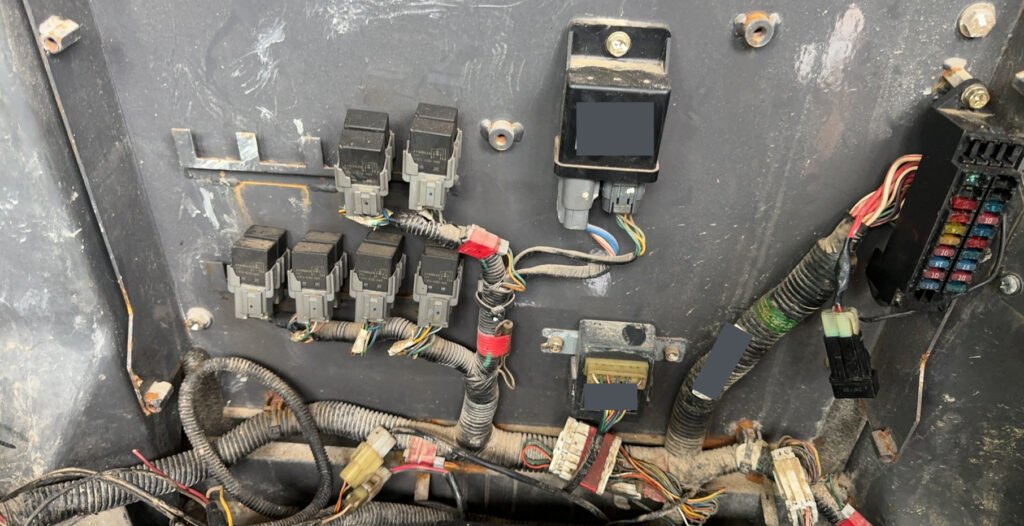
The first example shows an electrical mounting panel with grouped relays on the left, separate mounted housings nearer the middle and a narrow fuse holder at the right. Wiring and protective sleeving occupy the lower area. Fasteners, brackets and open spaces help the reader understand where the visible items sit relative to one another.
This wider view gives a parts discussion a reference frame. Instead of asking about “the black relay,” an enquiry can identify a row, a neighbouring bracket or a position near the edge of the panel. Those descriptions locate an item in the photograph without assigning an electrical function to it. The photographed arrangement remains specific to that example; another panel may use a different layout even when some housings look similar.
Let the detail retain its surroundings

The second example brings a row of relay housings and their grey bases into closer view. Wires leave the bases, while a larger sleeved run passes nearby. The retaining shapes and the spaces between the mounted items are easier to see at this distance.
A useful detail image does not have to isolate a housing against an empty background. Keeping an adjacent base or a small section of mounting surface can make its orientation clearer. When preparing an enquiry, describe the visible housing, base and mounting position separately. A clear exterior record helps identify the subject of the question; it does not establish the internal contact arrangement or the purpose of the surrounding wires.
Record the edge of the view honestly
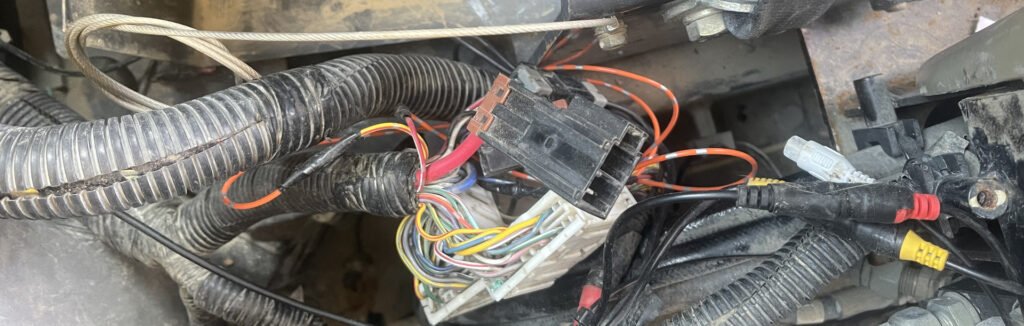
The third example shows connector bodies, gathered wires and protective sleeving in a confined area. A ring-shaped terminal is visible near the side of the view. These features show how crowded an electrical area can appear when photographed close up. They also demonstrate why a local photograph may leave important relationships outside the frame.
Describe what can actually be followed in the image. A connector body can be visible while its mating component is not. A terminal can be present without the photograph establishing its intended attachment point. When that missing context matters, request another view rather than completing the relationship from appearance alone.
Make the enquiry easier to follow
Use an overview to locate the subject, then a closer view to show the feature being discussed. Refer to a visible fastener, bracket or neighbouring housing so the reader can connect the two viewing distances when both photographs are confirmed to show the same item. Keep independently verified part references alongside, but separate from, the description of the image.
These three photographs are independent examples, not a sequence from one panel or repair. They support visual identification and enquiry documentation; a local photograph cannot replace an equipment-specific wiring diagram or establish electrical function, fitment, a fault or a repair result.
Questions and Answers
What does an overview add to a relay close-up?
It gives the item a visible position among brackets, neighbouring housings and wiring. A closer image can then describe the selected area more clearly.
Do similar-looking relay housings establish the same function?
No. Exterior resemblance does not establish the internal contact arrangement, electrical purpose or interchangeability. Those details need separate, reliable references.
Can wire colour or a visible terminal identify its function?
Not from these photographs. Record the visible feature without assigning a circuit purpose or an attachment point that the image does not establish.
Are the three photographs one panel shown during a repair?
They are independent field examples. No shared panel, machine or repair sequence is established.
Can a local photograph replace a wiring diagram?
No. It records visible position and surroundings, not every electrical connection. Equipment-specific electrical information requires the appropriate verified documentation.