A black connector housing is a useful starting point for a parts enquiry, but it is not a complete description. In the field records shown here, dark outer housings surround visibly different structures. One view brings a pale insert and green perimeter into view. Another shows a rounded body, a locking feature and wires turning back beside it. A third looks directly into a compact opening with a pale inner face. Calling all three “the black plug” would hide the most useful information.
At EexcavaStart, we use records like these to separate what a buyer can already show from what still needs confirmation. The goal is a clearer request for quotation: a specific part, supported by the right evidence, rather than a match based on a familiar color.
The face answers one question
The hand-held front view makes the opening the main subject. The surrounding lip, pale inner shape, central opening and smaller recesses can be compared without the wider machine filling the frame. These visible features give the enquiry a more precise vocabulary than “small connector” or “white insert.”
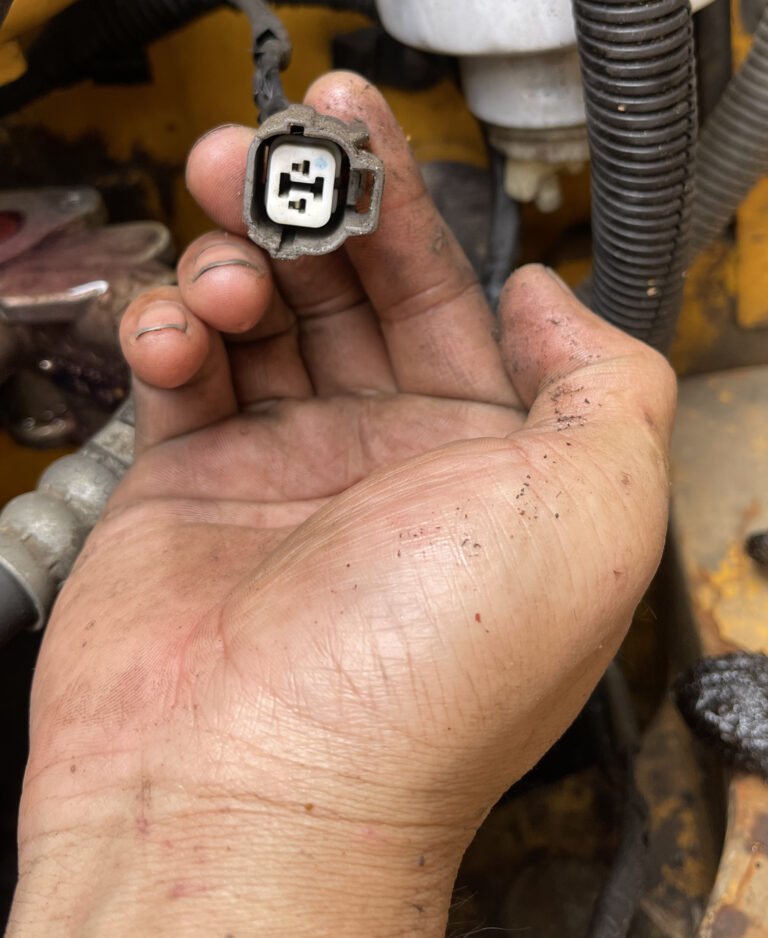
That image is especially useful when a supplier has several visually similar candidates. A buyer can point to the inner shape and ask for the corresponding mating-face view of the proposed part. The comparison then concerns a visible feature, rather than a guess about which catalogue photograph looks closest.
This is a separate example from the other records. It is not presented as a mating partner for either of them.
The side adds the locking detail
In the oblique close-up, a pale insert and green perimeter sit inside a black housing. The side projection and the way the body extends behind the opening are prominent. This is the information that disappears when an enquiry contains only a tightly cropped front view.
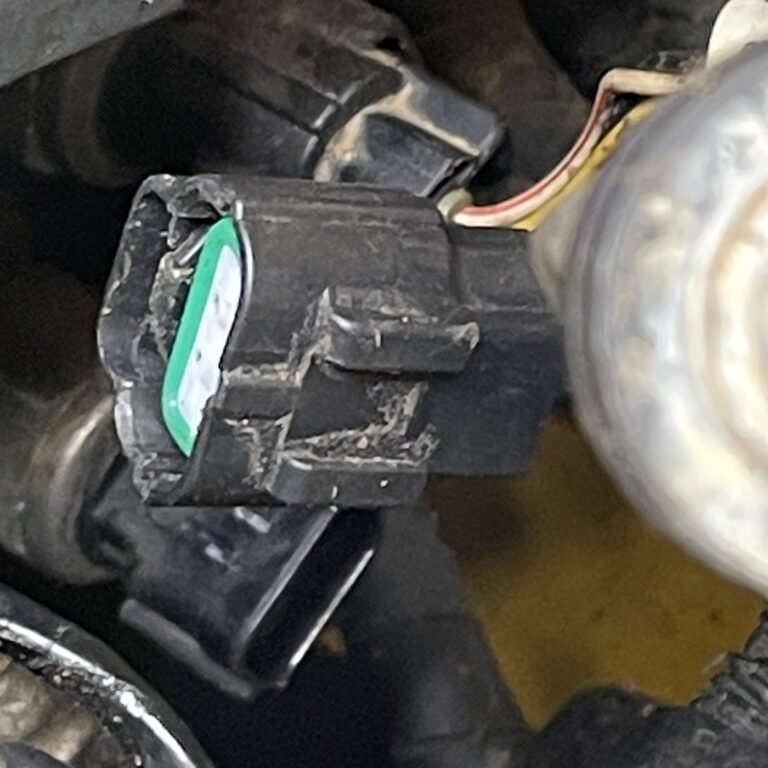
The angle also has a limitation: it is not a straight-on record of every internal position. Its strongest contribution is the relationship between the opening, the side feature and the rear of the housing. Describing that contribution accurately is more useful than treating every close-up as equally complete.
For an RFQ, the practical question becomes: does the proposed part show the corresponding housing profile and locking arrangement? A clear supplier photograph from that side can resolve a visual ambiguity before an order moves forward.
The cable exit adds context
The wider, horizontal detail shows a rounded black body with wires looping beside its rear. A locking feature remains visible toward the opposite end. Nearby metalwork is part of the original record, including an area that partly obstructs the view.
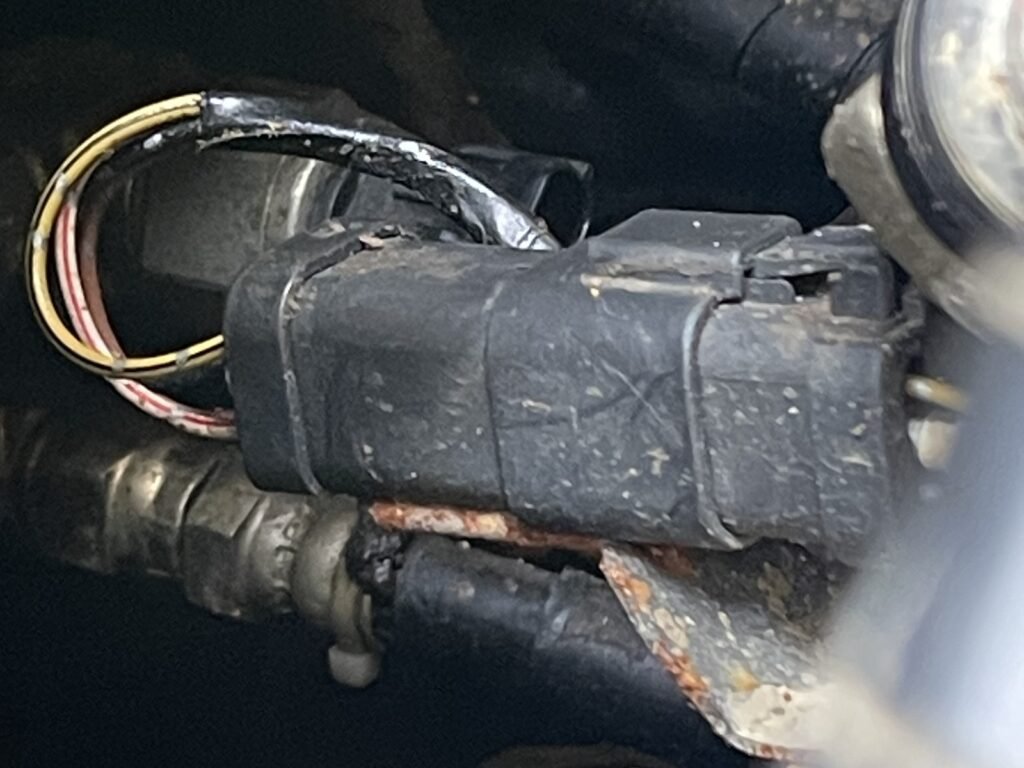
This image explains something that the first two angles cannot: how the visible wires leave the body and turn within the available space. It connects the part to its immediate surroundings without claiming that the pictured route is a wiring instruction. Keeping that context matters when a replacement looks convincing from the front but its rear shape remains unclear.
The wire colors are recorded as photographed. Their appearance is not a substitute for a circuit reference. A buyer can use the image to identify which bundle is being discussed, then provide the relevant documentation separately.
Turn the clues into one coherent enquiry
A useful RFQ can now distinguish three layers. First comes the identity supplied by the buyer: the equipment description, the part being requested and any legible reference from the original item. Second comes the visual comparison: the face shape, locking feature, body profile and cable exit. Third comes the information still needed before selection, such as confirmed dimensions, the correct mating component or an applicable wiring reference.
Keeping those layers together prevents a loose collection of photos from becoming a loose collection of assumptions. The front image can support a question about the opening; the side image can support a question about retention; the contextual image can support a question about rear clearance. Each image earns its place by answering a different question.
These photographs document visible structures, not a verified pinout, electrical rating, fault diagnosis or compatibility decision. Those details require the correct part references, equipment information and technical evidence. Similar color, a similar opening or an apparent contact count is not installation approval.
The result is a more focused conversation. Instead of asking whether a supplier has “one like this,” the buyer can ask which documented candidate matches the identified part and which remaining detail must be checked. That is where genuine field photographs become useful commercial evidence: they make the question clearer while leaving the final technical match to verified information.
Connector identification questions
1. Why is a black connector housing not enough to identify a replacement?
A housing color leaves several visible questions unanswered. The opening, inner shape, side locking feature, body profile and cable exit can provide different clues. Use those clues with the original part reference and equipment information to make the enquiry specific.
2. What does the hand-held front photograph contribute?
It shows the surrounding lip and pale inner face clearly enough to discuss their shapes. It gives a supplier a concrete feature to compare with a candidate’s mating face. It does not assign a function to any visible recess or contact.
3. Why retain an angled side view when the opening is less clear?
The angle can reveal a side projection, locking arrangement and the body’s depth behind the opening. It complements a front view rather than replacing it. In the pictured example, the side structure is more useful than attempting to count internal positions.
4. What can the cable-exit image tell a supplier?
It shows the visible direction of the wires, their turn beside the body and the surrounding space. This helps explain which rear profile is being discussed. The image is a contextual record, not a wiring route or permission to modify the harness.
5. Are the different photographed connectors compatible with each other?
No compatibility relationship has been established between these examples. They illustrate different identification clues. They are not offered as mating partners, a common circuit or an interchangeable product family.
6. What should accompany the photos in an RFQ?
State the equipment description, the requested part and the original reference where available. Add confirmed dimensions or relevant technical documentation, and name the remaining question, such as the mating face or rear profile. EexcavaStart can then discuss the evidence without treating appearance as a completed technical match.
Related reading: Cab and Control Parts: Position, Housing and Connection Records. Browse News & Insights.