A right-angle outline can make a fitting look easy to identify. Our field records show how much useful detail sits beyond that first impression. A bend and two visible threaded ends describe the outline; the openings, the features behind the threads, and the body between them make the enquiry more specific. The examples here remain separate photographic records. Their value is in the questions they help a buyer resolve, rather than a claim that one photographed component replaces another.
The outline gives context, not a complete identity
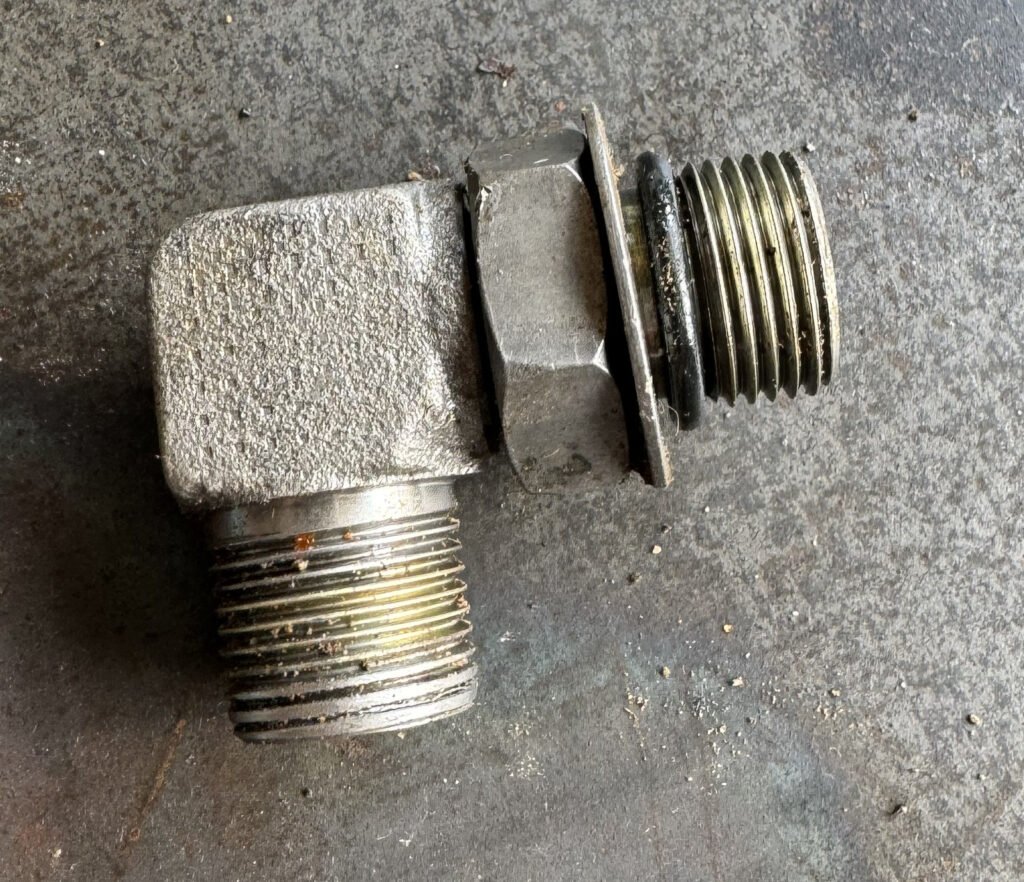
In the profile photograph, an angled body joins two externally threaded sections. Beside one section, a hexagonal feature and a wider, thin circular feature are visible. The arrangement is clear, while the openings face away from the camera. This is the kind of view that makes a component feel familiar quickly. In an enquiry, however, “angled body with two threaded ends” still describes a broad outline. The additional features deserve their own place in the description rather than disappearing into the word “elbow.”
One end can reveal information the side view hides
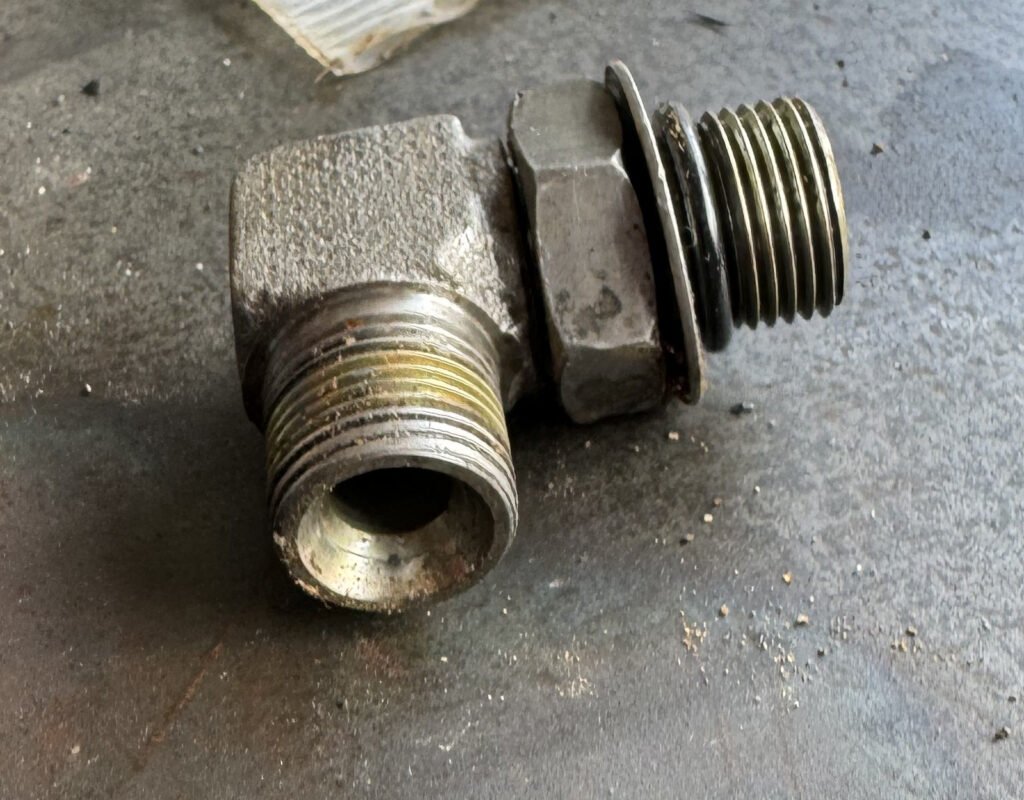
The open-end photograph brings a circular opening and its surrounding inner surface into view. The other threaded section remains visible from the side. The reader now has something specific to ask about at the end, rather than only the outside thread. This view adds a useful distinction between the opening, its surrounding surface, and the threaded exterior. Keeping those features separate makes a supplier’s reply easier to understand: which part of the connection is being described, and which feature needs a closer check?
Look behind the visible threads
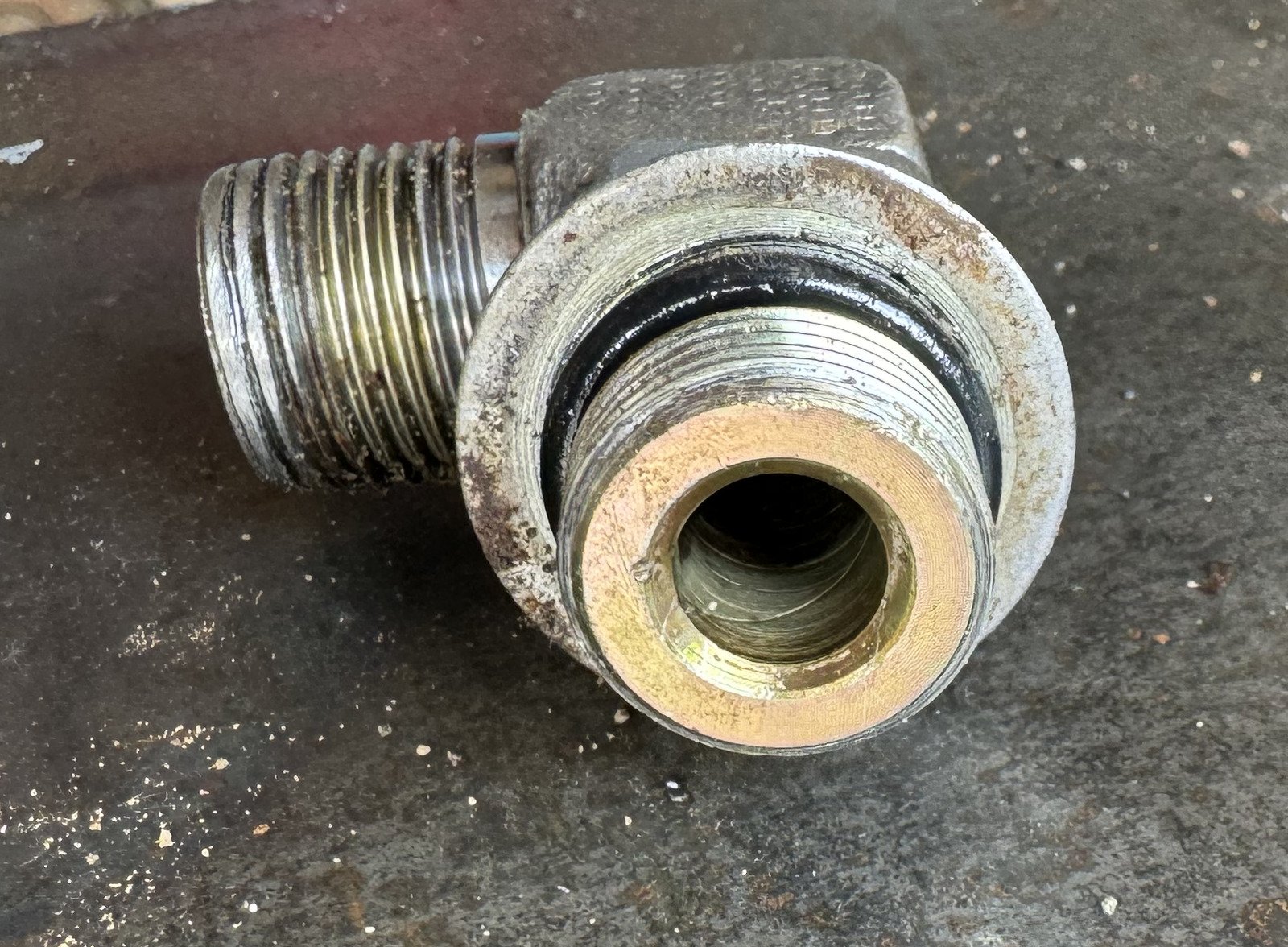
In the face-and-ring photograph, the front opening, external threads, a dark ring-like band, and a larger circular feature appear together. The useful detail is their relationship: the record continues behind the threaded tip. A description that mentions only the thread would leave that part of the picture out. For a buyer, the ring-like band and wider circular feature are therefore useful confirmation points. They give the conversation a visible reference when asking for the complete connection arrangement.
A different record introduces a different question
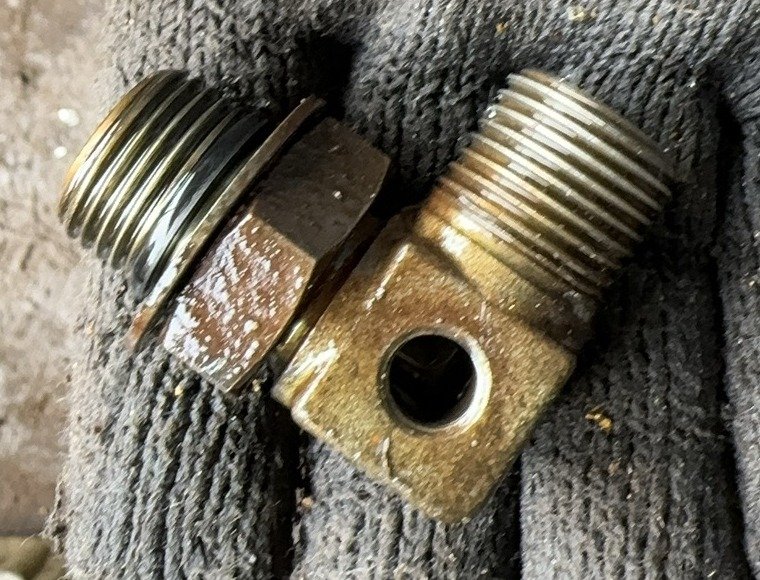
The hand-held example has a gold-toned body, two visible externally threaded sections, and a circular opening in the side of the body. That opening adds another question beyond the ends. It belongs in the enquiry even when the buyer’s first description is simply “a right-angle fitting.” Colour is a visible characteristic too, but the side opening is a more specific feature to discuss. This separate example shows why a useful comparison retains the body details as well as the overall silhouette.
Turn the observations into an enquiry a supplier can answer
For EexcavaStart, the next step is to organize the enquiry around end A, end B, and the body. End A and end B are enquiry labels, not technical designations: identify them consistently against the supplied image so that both sides discuss the same location. Beside each, keep the original reference, any confirmed connection information, and the dimension that still needs checking. Put the circular side opening or the wider feature behind a thread in a separate body-details note. State the intended application and keep unknown fields visibly open rather than filling them from resemblance.
This gives a supplier a more answerable request than “please quote the same elbow.” The reply can identify what agrees at each end, what differs, and which information is still required. If a price arrives before the connection details are settled, pause the price comparison. First establish what item each quotation actually covers. A lower price is not a meaningful comparison when the two offers describe different or still-undefined ends.
A clearer basis for the next conversation
The limits can be stated once: these unscaled records verify no thread designation, exact dimension, pressure rating, material, sealing function, or interchangeability. They also contain no product test or completed repair result. What they do offer is a concrete starting point for the next conversation. The buyer can move beyond “it has the same bend” to a structured request about both connections and the body features between them. That is a stronger basis for checking a proposed part before treating the prices as comparable.
Parts enquiry FAQ
1. Does the same right-angle shape mean two fittings will connect in the same way?
No. The outline alone leaves the end openings, features behind the threads, dimensions, and connection requirements unresolved. These records do not establish interchangeability.
2. Can the visible threads be assigned a connection standard from these photographs?
No designation is verified in these records. The images provide visible details for a confirmation request, not a basis for naming a thread standard or a compatible mating part.
3. What does the face-and-ring photograph add?
It shows the opening together with the external threads, a dark ring-like band, and a larger circular feature. Their relationship is visible; the sealing arrangement, band material, and completeness remain unverified.
4. What can be said about the circular side opening in the hand-held example?
It is a visible body feature worth retaining in the enquiry. Its function is not established here, and the example is not presented as a replacement for another photographed record.
5. Does the gold-toned appearance confirm the material?
No. A photographed colour is not a verified material or coating specification. Keep the visible appearance separate from confirmed component information.
6. What should accompany a fitting enquiry when the connection is still uncertain?
Keep the original reference, distinguish both ends, and identify the visible features that need confirmation. Add verified dimensions with their measurement basis and the intended application. Do not turn an unscaled photograph into a precise dimension or an approval to install.
Related reading: Hydraulic Parts Records: Assemblies, Ports and Connections. Browse News & Insights.