A radiator enquiry can appear straightforward when a rectangular finned face looks familiar. Our field records show why that first impression is incomplete. In one broad view, the finned area sits inside a larger assembly with tanks, side supports, mounting features and projecting connections. A narrower finned component is also visible beside it. Those outlines answer different questions. At EexcavaStart, we separate the core boundary, the complete assembly and the installation envelope before treating two parts as meaningful replacement candidates.
The core and the assembly do not share one boundary
In the broad front-view record, the central component has a wide finned face, a dark upper tank and a lower connection extending beyond the surrounding frame. The side supports also occupy space outside the finned area. A description such as "same width and height" therefore leaves an important question unanswered: which edges define those dimensions?
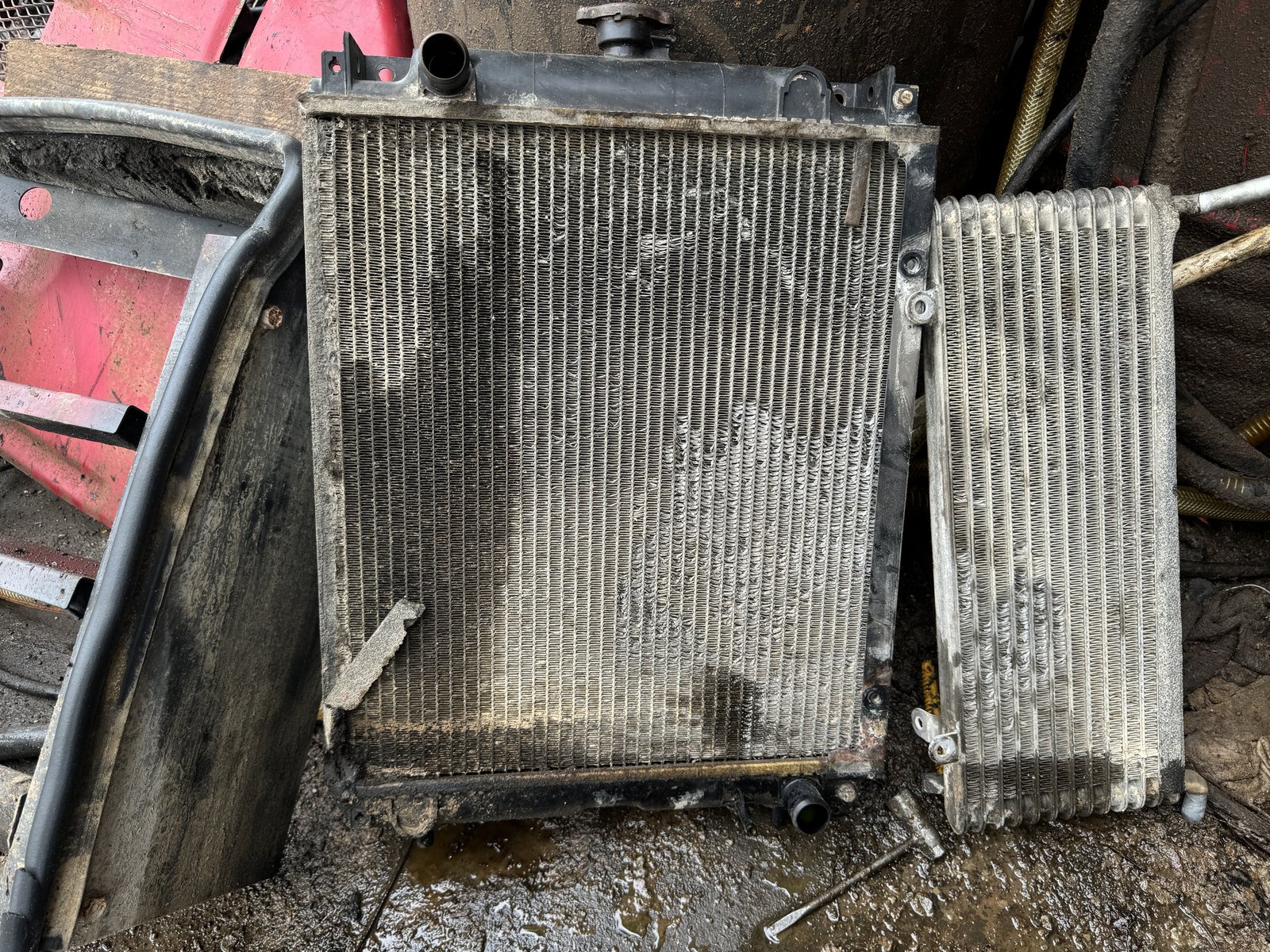
Core dimensions describe the specified finned section. Overall assembly dimensions need their own definition, including the tanks or frame features being counted. Neither should silently substitute for the other. A quote can otherwise appear to agree with a customer’s figures while referring to a different physical boundary. Even a clear frontal outline does not supply the unseen depth or the position of every rear-facing feature.
The separate narrow unit beside the central component adds another useful distinction. Its function and inclusion in any offer need their own confirmed description. The large panel at the left is another separate visible object. Our comparison keeps these items distinct instead of turning the whole scene into one product specification.
Projecting connections change the space a part occupies
A close edge view places three features together: the finned section, a large open pipe connection and a mounting feature. A smaller projecting connection is visible nearby. The pipe opening is not an outer corner of the core, and the mounting opening is not the centre of the pipe. A single unqualified "size" cannot describe all three relationships.

For a replacement comparison, connection diameter, direction and position are different questions from the finned area’s width. A connection may also extend outward beyond the face shown in a front view. Its surrounding space must be considered separately from a flat rectangular outline. The appropriate hose arrangement and available clearance remain application-specific checks alongside confirmed part information.
The ruler beside the connections is useful evidence of what was being examined, but it is not a reliable total-width result. It does not visibly establish both limits of the complete assembly or every relevant contact point. We do not turn an angled scale in a field photograph into a confirmed dimension, tolerance or replacement specification.
The outer profile is not just the tank height
Another detail record shows a raised feature above a dark tank, with a ruler close to the visible profile. The tank surface and the top of the raised feature are different reference levels. Describing only the tank’s height would leave that projection out of the description.
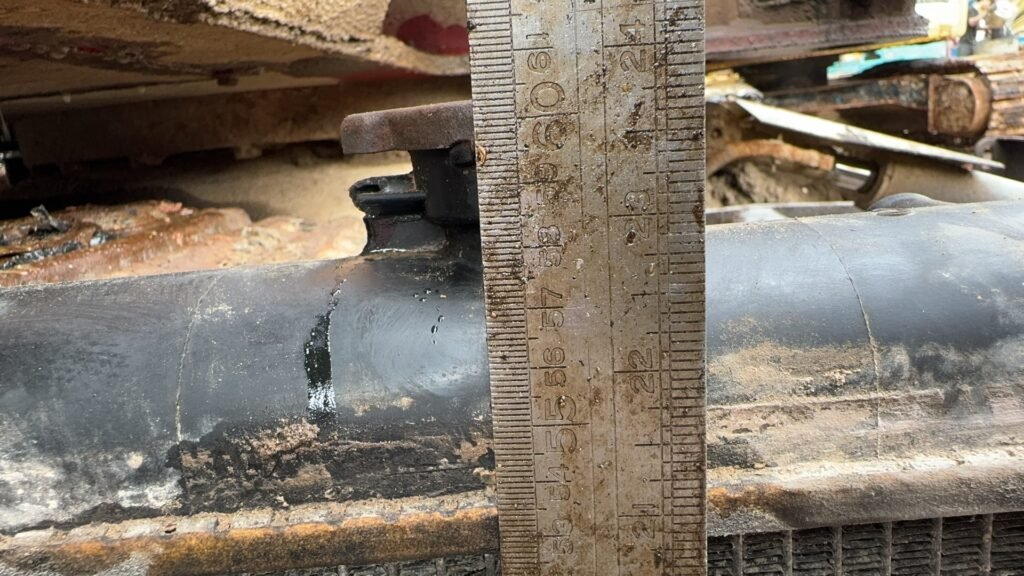
The same principle applies to mounting-hole positions. An opening’s location relative to a defined frame edge matters separately from the overall outline. Hole spacing, bracket offset, facing direction and surrounding structure answer different parts of the fit question. The records illustrate those distinctions; a verified mounting drawing and complete measurements would supply the additional information needed for a physical comparison.
What we would resolve before calling a comparison complete
A useful radiator enquiry distinguishes the core dimensions from the complete assembly dimensions and states which tanks, brackets and connections are included in each. It also identifies the connection arrangement and the mounting references that matter in the particular installation. Existing part numbers and machine details contribute separate evidence; they do not make an obvious physical difference disappear.
When a quotation arrives, compare each stated dimension against the same defined boundary in the enquiry. A core-width figure belongs beside another core-width figure, while an assembly envelope needs a separate comparison. If the core appears similar but a connection projects differently, that difference remains open rather than being dismissed as cosmetic. A missing mounting reference is a useful follow-up question, not a reason to fill in a likely value.
The photographs document visible geometry, not cooling capacity, pressure integrity, a diagnosed fault or a successful repair. They are existing observations, not instructions to dismantle equipment for more pictures. Do not open a hot or pressurised cooling system or disturb connections to reproduce a view. Use available records and appropriate service information. For EexcavaStart, the value is a better-defined comparison: what is visible, which boundary is being discussed, and what still needs confirmation.
Radiator Dimensions and Fit: Enquiry FAQ
1. If the core width and height match, is the radiator interchangeable?
Not on that information alone. The tanks, frame, mounting arrangement, connection positions and relevant installation space can differ outside the finned area. Matching a core description is one part of a comparison, not a fitment approval.
2. What should "overall size" include in a radiator enquiry?
State the physical limits being measured. Distinguish the finned section from the assembly with tanks and frame, and identify whether brackets or projecting connections are included. An unexplained overall figure may refer to a different boundary from the supplier’s figure.
3. What if a pipe opening looks the same size but points differently?
Keep the direction and position difference explicit. Similar opening appearance does not establish the same hose arrangement or surrounding clearance. Confirm the connection details against the application instead of treating the difference as cosmetic.
4. Does matching mounting-hole spacing settle the comparison?
No. The holes also have positions relative to the frame and connection arrangement. Bracket offset, facing direction and nearby structure remain separate matters. The accompanying photographs do not provide a verified mounting drawing.
5. Can the ruler photographs be used as exact dimensions for a quote?
Not as supplied here. The views do not consistently show both measurement limits or all relevant contact points, and perspective remains present. We use them to identify the feature under discussion, not to publish numeric dimensions or tolerances.
6. Do the marks, deposits or adjacent finned unit prove a fault or replacement result?
No. Surface appearance records the visible condition at that moment. It does not establish a leak, blocked core, cooling performance or completed repair. A separate item beside the radiator is not automatically an included component or an interchangeable replacement.
Related reading: Filter and Cooling Parts: Ends, Openings and Mounting Context. Browse News & Insights.