A ring can look straightforward from the front while carrying a more specific shape along its edge. These EexcavaStart field records bring that distinction into view: a dark ring with a recessed, lip-like profile, a green band held between caliper jaws, and a yellow-toned ring shown across its outer outline. Each record raises a different question about the item being compared.
The edge carries information the circle leaves out
In the dark-ring detail, the curved edge has a visible recess and a lip-like profile rather than one uninterrupted rounded surface. The caliper is beside that local edge, and the complete ring outline is outside the photograph. This view is useful because the profile remains visible. Reducing the description to "a black O-ring" would lose the very feature that makes the record worth discussing.
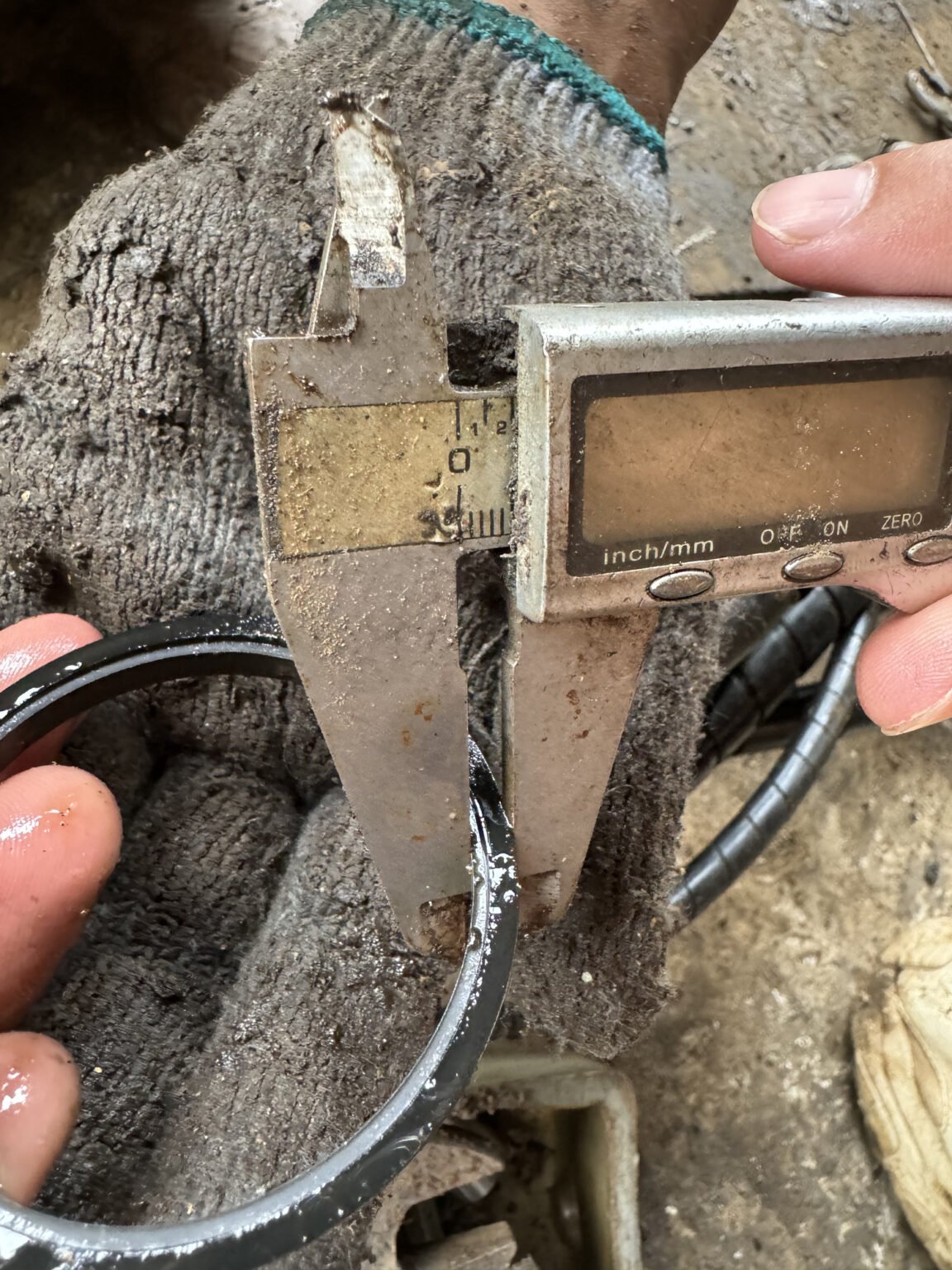
The colour and surface appearance stay exactly as photographed. Neither is used to name the material, grade its condition or diagnose a leak. The concrete enquiry is about the shape: which visible recess or lip needs to correspond with the proposed item?
A local band dimension is not a diameter
The green-band record brings another measurement object into view. The caliper jaws sit across a local band dimension, while the curved part continues below them. That is a different question from the distance across the ring’s opening or its complete outer boundary.
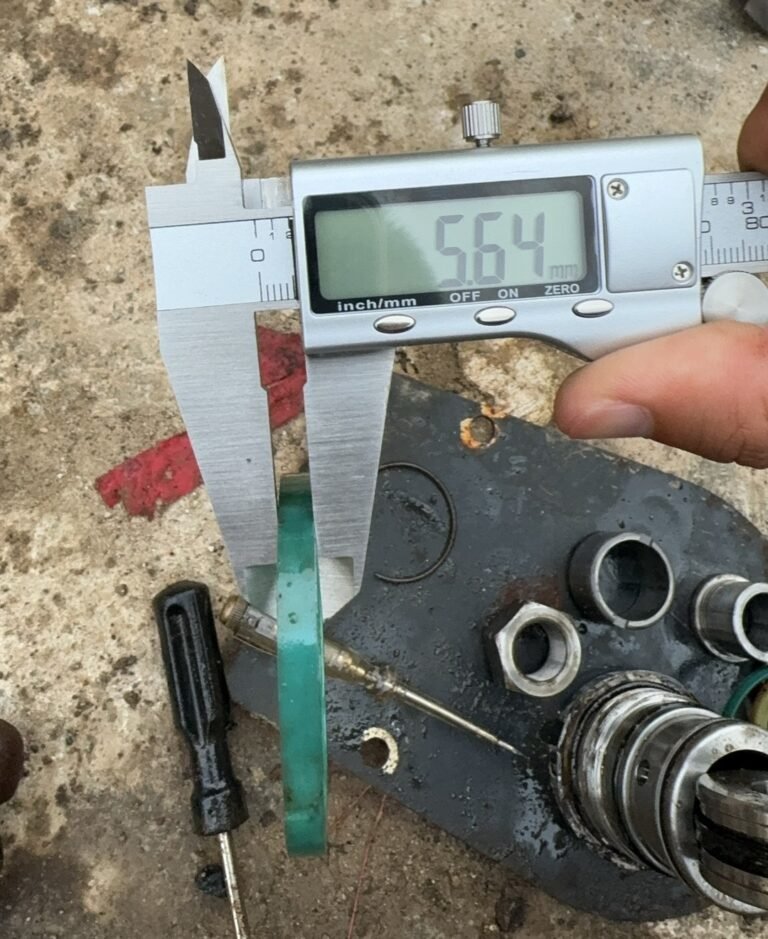
Inner diameter, or ID, refers to the opening; outer diameter, or OD, refers to the outside boundary. A seal description can also need the section shape and a clearly defined width or thickness. Those terms should identify distinct features, not three alternative names for whichever number is easiest to see. The photograph contributes the visible jaw position without supplying a complete dimensional description.
The outline and the surrounding parts remain separate
In the yellow-ring record, both the opening and the outer perimeter are visible, with the external caliper jaws near opposite outer edges. The ring’s broad face also remains apparent. Nearby green rings and metal pieces provide context, but their presence does not establish an assembly order, a complete kit or the yellow ring’s installation position.
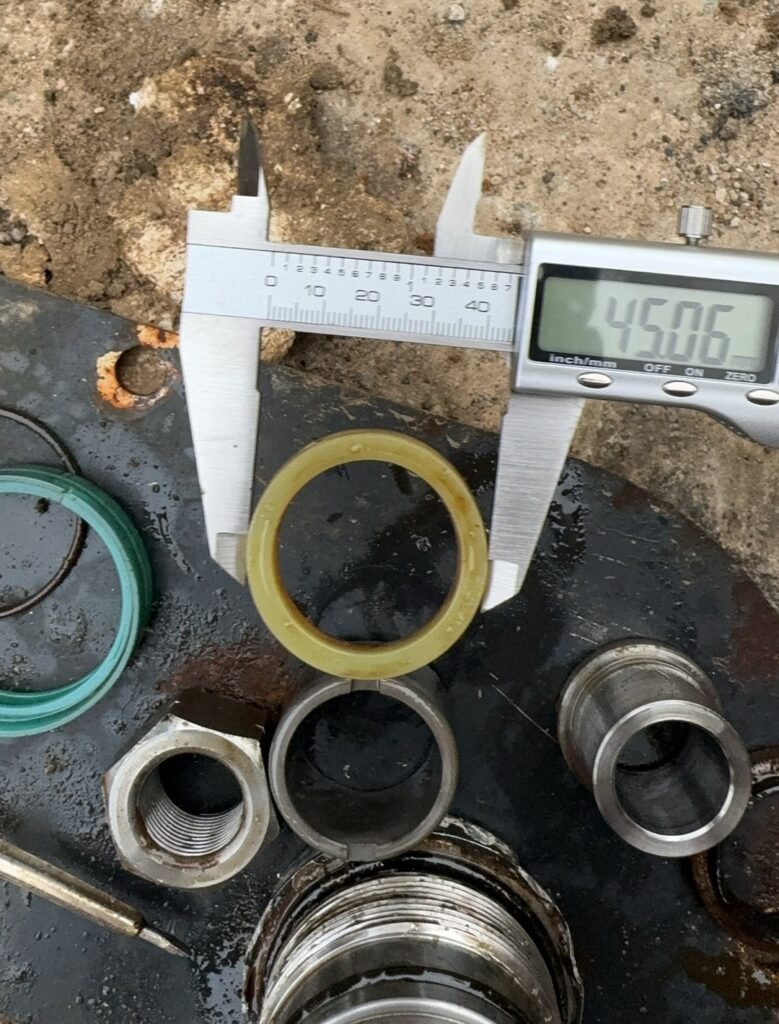
For a replacement comparison, EexcavaStart keeps the ring outline, local section and intended position as separate requirements. Two diameter figures can leave an important profile difference unresolved. Conversely, a similar-looking edge does not settle the opening size or the surrounding fit.
These are independent field examples, not a sequence from one repair. Screen values remain visible in the original records, but no value is adopted here as a verified specification: measurement basis, contact and instrument checks need their own confirmation. The useful result is a more precise part description, with the opening, outside boundary and profile each given their proper place.
Seal Outline and Section: Three Questions
1. If the inner and outer diameters agree, is the replacement confirmed?
Not by those figures alone. The visible profile, defined section dimensions and intended installation position remain separate comparison points. Keep a profile difference open for checking rather than overlooking it because two diameter figures agree.
2. Is the dark ring in the detail photograph simply an O-ring?
No exact seal type is identified here. Its visible recessed, lip-like edge should be retained in the description instead of assigning a familiar ring name. The image supplies a shape reference, not a material specification or verified function.
3. Why show the caliper displays without using the numbers as specifications?
The tool and its position are part of the real record. Adopting a number requires a clear measurement object, suitable contact and instrument checks. These photographs illustrate different objects being examined; they do not provide a complete verified dimensional set or replacement approval.
Related reading: Mechanical Parts Records: Interfaces, Dimensions and Equipment Context. Browse News & Insights.